Garlic Sauce Beef: Mongolian Beef and Its Sauce Cousins
In short
- Garlic sauce beef is sliced beef stir-fried in a brown sauce that tastes garlicky, a little sweet, a little sour and mildly hot.
- Mongolian beef is sweeter and darker, with scallions and almost no tang. Beef with garlic sauce has more vegetables and a vinegar edge.
- Order sauce first: pick the sauce you’re in the mood for, then the beef dish, or a swap like eggplant or chicken in the same sauce.
- “Garlic sauce for beef” can also mean a creamy steak sauce or toum, which is a different kitchen entirely.

Chinese takeout menus list beef under lots of names, and the names don’t always tell you how the dish will taste. Beef with broccoli, Mongolian beef, Hunan beef, beef with garlic sauce. They’re all brown, all sliced beef, all on rice. The difference is the sauce.
That’s the useful way to read the menu. Decide which sauce you want tonight, then choose what goes in it. This guide starts with garlic sauce beef, then lays out its cousins by sauce.
What is garlic sauce beef?
Garlic sauce beef is a Chinese-American stir-fry of thin-sliced beef in a brown sauce made with garlic, ginger, chili, soy sauce, vinegar and sugar. The sauce tastes savory, garlicky, a little sweet, a little sour and mildly hot. Menus may call it beef with garlic sauce or beef in garlic sauce.
The vegetables change from kitchen to kitchen. Common ones are wood ear mushrooms, bamboo shoots, water chestnuts, bell peppers, carrots and celery. Some places add broccoli. Many menus mark the dish with a chili icon, but it is usually milder than the dishes marked Hunan or Szechuan.
The sauce comes from a Sichuan style called yu xiang, often translated as “fish-fragrant.” The name refers to seasonings once used for cooking fish, and there’s no fish in it. In Chinese restaurants you’ll see the same sauce on shredded pork and on eggplant.
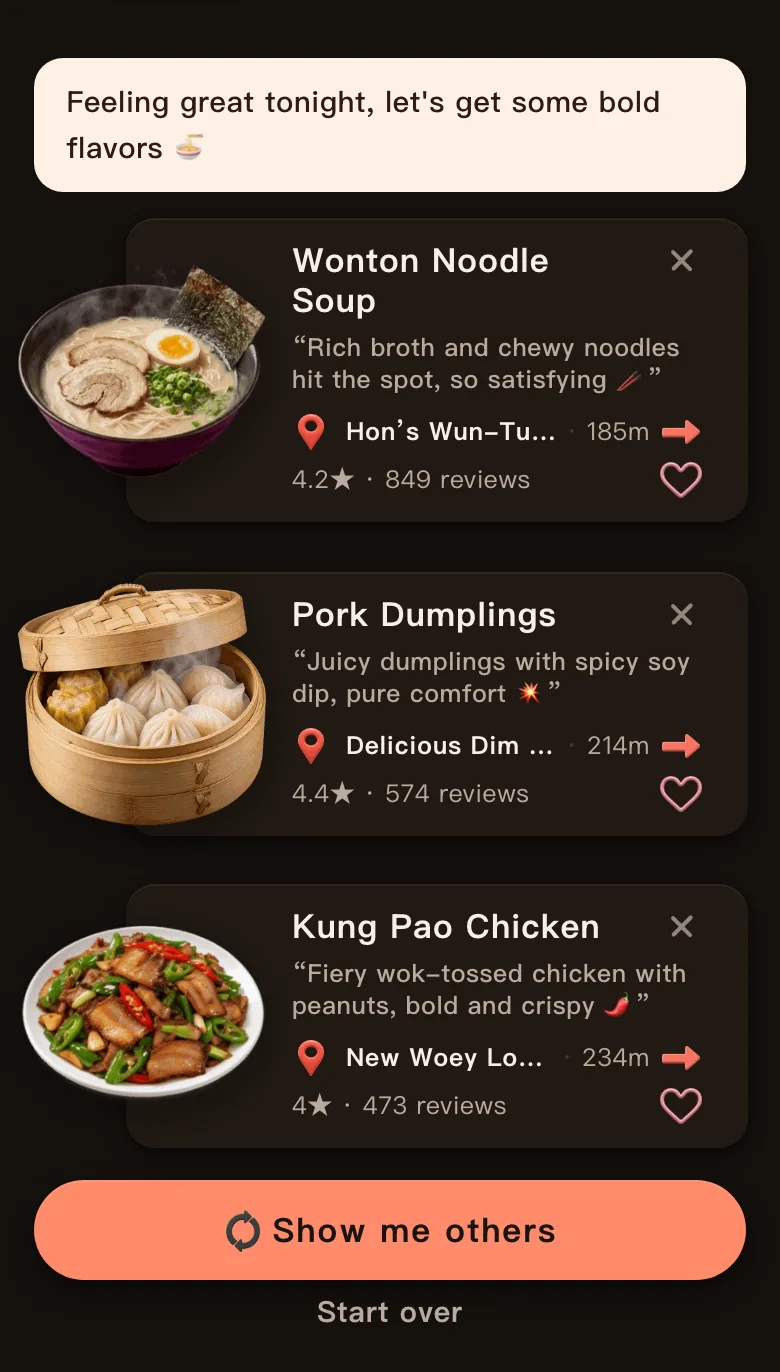
For this guide I set Today’s Mealow, my own app, to San Francisco’s Chinatown and asked for a bold Chinese dinner for one. The cat came back with wonton noodle soup, pork dumplings and kung pao chicken. No garlic sauce beef on the card. Kung pao is its closest cousin on the list below, so it was the pick I’d walk to if I’d come in wanting that sweet, sour, hot flavor.
What is the difference between Mongolian beef and beef with garlic sauce?
Mongolian beef is sweeter, darker and milder, made with soy sauce, sugar, garlic and lots of scallions. Beef with garlic sauce is tangier and a bit hotter, with vinegar and chili in the sauce and more vegetables in the pan. Mongolian beef is a Chinese-American creation, not a dish from Mongolia.
The quick test is sour. If you want a sticky, sweet, soy flavor with no tang, order Mongolian beef. If you want something that wakes your mouth up a little, order the garlic sauce. Mongolian beef is often coated and seared until the edges crisp, while garlic sauce beef is usually soft and saucy.
Which Chinese beef dishes are like beef with garlic sauce?
Chinese beef dishes like beef with garlic sauce fall into three sauce families: brown and mild, sweet and sticky, and hot and spicy. The list below groups the common beef dishes by sauce, so you can move one step sweeter, hotter or milder from garlic sauce beef. Noodle and rice dishes sit beside them.
Brown and mild
- Beef with broccoli. A savory oyster sauce, no heat. The safe order for a mixed table.
- Pepper steak. Beef with green bell peppers and onions in a brown sauce.
- Beef with black bean sauce. Salty and deep from fermented black beans, often with peppers and onions.
- Ginger and scallion beef. Light, fragrant and only mildly salty.
- Black pepper beef. Brown sauce with a lot of cracked black pepper, warm rather than hot.
Sweet and sticky
- Mongolian beef. Sweet soy, scallions, sometimes crisp edges.
- Sesame beef. Fried beef in a sweet sauce, topped with sesame seeds.
- Orange beef. Crispy beef in a sweet sauce with orange peel, sometimes with dried chilies.
Hot and spicy
- Beef with garlic sauce. Sweet, sour and mildly hot. The middle of this family.
- Kung pao beef. Diced beef with dried red chilies, peanuts and a sweet-sour sauce.
- Szechuan beef. Hotter, often with celery and carrots. Some places serve it shredded and crispy.
- Hunan beef. On many menus the hottest beef, with fresh chilies and plenty of vegetables.
Beef on noodles and rice
The same beef also comes on noodles or rice, if you’d rather have it all in one dish.
- Beef chow fun. Wide rice noodles fried with beef, bean sprouts and scallions.
- Beef lo mein. Soft egg noodles tossed with beef and vegetables in a light soy sauce.
- Beef fried rice. The one-container version, for when you don’t want a separate side of rice.
Menus aren’t consistent, so one restaurant’s Szechuan beef can be another’s Hunan beef. If the heat matters, ask how hot it comes and whether they can make it milder.
What else comes in garlic sauce on a Chinese menu?
On a Chinese menu, garlic sauce also comes with eggplant, chicken, shrimp, pork, tofu and mixed vegetables. A takeout menu will often list the same sauce under several meats. Once you know you like it, order it with whatever you’re in the mood for tonight.
- Eggplant with garlic sauce. Soft, silky eggplant that soaks up the sauce. Try it even if eggplant isn’t usually your thing.
- Chicken with garlic sauce. The same flavor with a lighter meat.
- Shrimp with garlic sauce. Sweet shrimp against the tangy sauce.
- Pork with garlic sauce. Usually shredded pork, which is the classic Sichuan version.
- Tofu or mixed vegetables with garlic sauce. The meat-free way to have it.
How do I order Chinese takeout by sauce first?
To order Chinese takeout by sauce first, pick the sauce family you want tonight, then the dish inside it, then the protein. If you skip something, like beef or nuts, swap within the same sauce. Garlic sauce eggplant is a good dish in its own right.
- Name the sauce. Brown and mild, sweet and sticky, or hot and spicy.
- Pick the dish. Use the family lists above. Garlic sauce sits in the middle of the hot family.
- Pick the protein. Beef if you want it, or the eggplant, chicken, shrimp or tofu version.
- Check the extras. Kung pao has peanuts.
On my Chinatown result, step one was already done: I’d asked for bold, and kung pao chicken sits in the hot family. Step two is where I’d ask that kitchen whether it makes beef with garlic sauce. For step three, beef if they have it, chicken if they don’t. Step four: kung pao has peanuts, so check before ordering it for a table.
Is garlic sauce for beef always the Chinese kind?
Garlic sauce for beef isn’t always the Chinese kind. At a steakhouse it usually means garlic butter or a creamy garlic sauce on steak or steak bites. At a Middle Eastern place it means toum, a whipped garlic sauce served with shawarma. Read which kitchen the menu belongs to before you order.
The three taste nothing alike. Chinese garlic sauce is sweet, sour and hot. Steakhouse garlic sauce is rich and buttery. Toum is sharp, white and very garlicky. If you’re in the mood for garlic but not sure which kind, a random cuisine pick can settle the kitchen first. For pasta nights, the pasta shapes guide sorts shapes into families the same way. More pickers like that one are on the tools page.

Not sure it’s a Chinese night? Today’s Mealow asks six questions, from the cuisine you want to anything you skip, and picks 3 dishes from real places near you.
Pick tonight’s dishWhat else do people ask about garlic sauce beef?
Is beef with garlic sauce spicy?
Beef with garlic sauce is mildly spicy on most Chinese-American menus. It has chili in the sauce, but sugar and vinegar soften the heat. Ask for it mild or extra hot if the menu doesn’t say.
Is beef with garlic sauce the same as Szechuan beef?
Beef with garlic sauce and Szechuan beef are different dishes. Szechuan beef is usually hotter and less sweet, often with celery and carrots. Some menus serve it shredded and crispy.
Does beef with garlic sauce have fish in it?
Beef with garlic sauce has no fish in it. Its Chinese name, yu xiang, means “fish-fragrant,” which refers to seasonings once used for fish. Ask the restaurant if you need to check every ingredient.
What is the difference between Hunan beef and Szechuan beef?
On Chinese-American menus, Hunan beef is usually the hotter of the two, with fresh chilies and more vegetables. Szechuan beef tends to be a little sweeter. Recipes vary, so ask the restaurant.
What should I order with beef with garlic sauce?
Order beef with garlic sauce with plain white rice to soak up the sauce. If you’re sharing, add something mild like beef with broccoli or a soup, so the table isn’t all heat.