Spicy Shrimp Rolls: What’s Inside and What Else to Order
In short
- A spicy shrimp roll is a sushi roll of cooked shrimp mixed with spicy mayo, rolled with rice and seaweed, often with cucumber or avocado.
- The shrimp is cooked, either poached or fried in tempura batter. The crunchy version adds tempura flakes or uses fried shrimp.
- Build the rest of the order with two questions: is everyone eating raw fish, and do you want more heat or a break from it?
- The list below sorts rolls, small plates and bowls by those two answers.

If you want a spicy roll and you’d rather skip raw fish, the spicy shrimp roll is usually the one on the menu that fits. It’s creamy and a little hot, and you know what you’re getting.
Choosing the rest of the order takes longer. One roll is a light dinner, and a sushi menu runs long. This guide covers what’s inside the roll, then sorts what to order next by two questions.
What is in a spicy shrimp roll?
A spicy shrimp roll has cooked shrimp, chopped or whole, mixed with spicy mayo, which is mayonnaise stirred with sriracha or another chili sauce. The filling is rolled with sushi rice and a sheet of nori. Many kitchens add cucumber, avocado or scallion, and some roll it inside out with sesame seeds.
Menus write it a few ways: spicy shrimp roll, spicy shrimp maki, or a spicy shrimp hand roll when it comes as a cone. The filling is the same idea in each. A hand roll is meant to be eaten right away, before the seaweed softens.
Some places top the roll with an extra line of spicy mayo, eel sauce or a sprinkle of chili flakes. Others keep the sauce inside. If you want it hotter, ask for chili oil or extra sriracha on the side.
Is a spicy shrimp roll cooked or raw?
The shrimp in a spicy shrimp roll is cooked. Kitchens poach or boil it, or fry it in tempura batter for the crunchy version. Raw shrimp does appear at sushi bars, but as its own item, often called sweet shrimp or amaebi. If the menu doesn’t say, ask the restaurant.
That makes it a common pick for someone at the table who avoids raw fish. Check the rest of the roll, though. A few versions are topped with raw tuna or salmon, which the menu will normally name. The same raw-or-cooked question comes with every roll, and the top restaurant dishes list treats it as the one choice sushi asks of you.
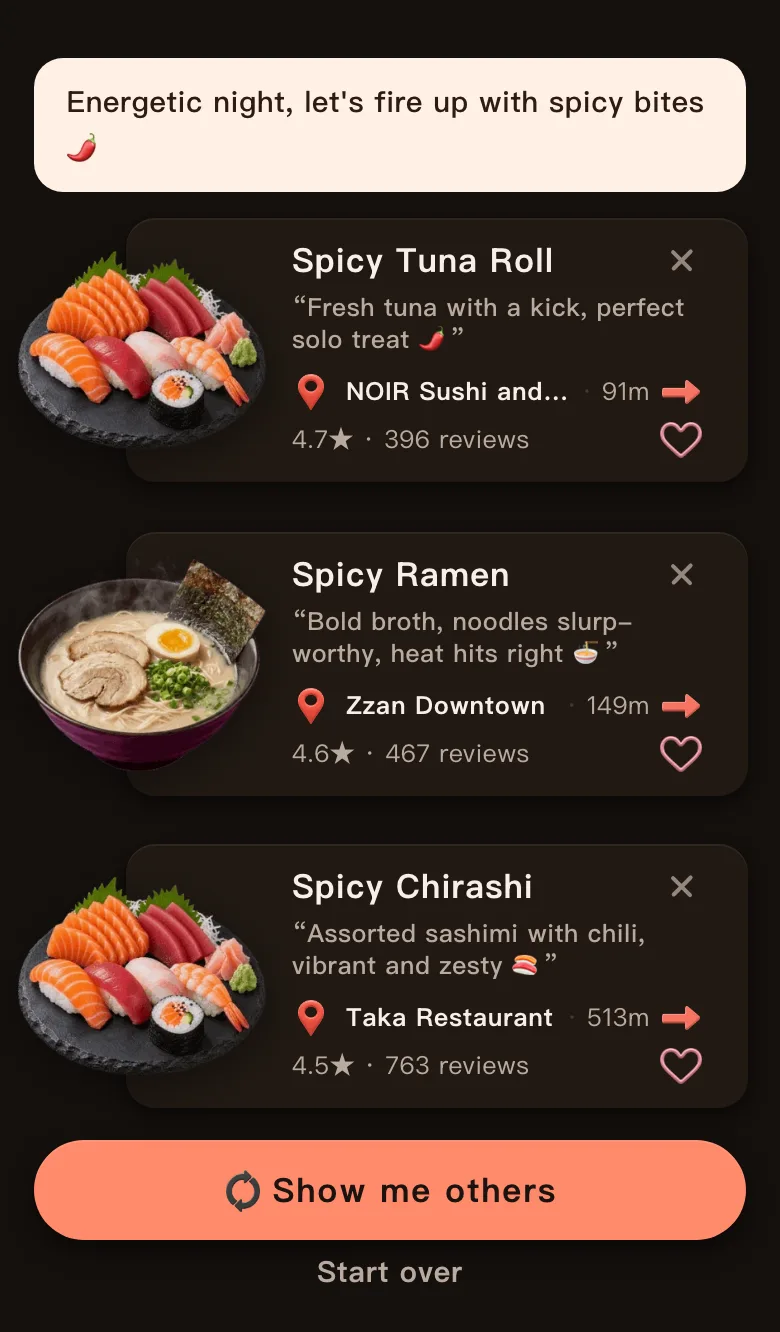
San Diego was my test city for this roll. I pointed Today’s Mealow, the app I build, at downtown and asked for a spicy Japanese dinner for one. The cat said “Energetic night, let’s fire up with spicy bites” and offered a spicy tuna roll, spicy ramen and spicy chirashi. No spicy shrimp roll on the card.
Two of the three are raw fish. The chirashi card even says “Assorted sashimi with chili.” As a raw-fish eater, I’d walk to the tuna roll, the closest at 91 m. Then I’d ask whether they make a shrimp version. For someone who skips raw fish, the ramen is the cooked pick. The tuna roll and chirashi cards share one platter photo, so I read the dish names, not the pictures.
What makes a spicy shrimp roll crunchy?
A crunchy spicy shrimp roll gets its crunch from tempura. Either the shrimp is battered and fried before it goes in, or the roll is coated in tempura flakes, the small fried bits of batter. Some menus call it a crunchy roll, a crispy shrimp roll or a spicy shrimp tempura roll.
The two kinds eat differently. Fried shrimp inside gives a warm, crisp bite in the middle. Tempura flakes on the outside give crunch on every piece, plus a little sweetness if the roll also gets eel sauce. If the menu doesn’t say which, ask.
Crunch fades as the roll sits. Eat the crunchy version at the table. For takeout, the plain spicy shrimp roll holds up better on the way home, and the delivery checkout checklist covers the rest of a sushi order that has to travel.
If you’re making one at home, toasted panko is a common stand-in for tempura flakes. Scatter it on just before you eat.
What should I order with spicy shrimp rolls?
Order around a spicy shrimp roll with two questions. Is everyone eating raw fish? Do you want more heat or a break from it? The answers send you to one group below: cooked and spicy, cooked and mild, raw and spicy, small plates, or bowls when a roll isn’t enough.
For one person, pick one group and order one thing from it. For a table, take one dish from the mild group so anyone who finds the shrimp roll hot has somewhere to go.
Cooked and spicy: keep the heat, skip the raw fish
- Spicy crab roll. Usually imitation crab in spicy mayo, close to the shrimp roll in feel.
- Spicy crawfish roll. Cooked crawfish tails with chili, sweeter than shrimp.
- Dynamite roll. A name menus use for different spicy rolls, often with tempura shrimp or baked seafood. Ask what’s in it.
- Spicy shrimp hand roll. The same filling in a cone, if you want a second round without a second plate.
Cooked and mild: a break from the heat
- California roll. Imitation crab, avocado and cucumber. The safe roll for a mixed table.
- Eel and avocado roll. Grilled eel with a sweet glaze, rich and not hot at all.
- Shrimp tempura roll. Crunch with no chili, for when you like the shrimp more than the heat.
- Sweet potato tempura roll. Soft, sweet and fried, with no seafood.
- Cucumber roll. Thin, cold and crisp. Good between bites of anything spicy.
- Avocado roll. Creamy and plain.
- Ebi nigiri. Butterflied cooked shrimp over rice, the plain version of what you already like.
- Tamago nigiri. A slice of sweet rolled omelet on rice.
Raw and spicy: for the raw-fish eater at the table
- Spicy tuna roll. The raw cousin of the shrimp roll, with the same spicy mayo.
- Spicy salmon roll. Richer than tuna, with the same sauce.
- Spicy yellowtail roll. Often with scallion, lighter and cleaner tasting.
- Spicy scallop roll. Soft and sweet. Check whether this kitchen serves it raw or seared.
Small plates and soup
- Miso soup. Warm and salty, a good first thing.
- Edamame. Salted, or tossed with garlic and chili if you want the heat to start early.
- Seaweed salad. Sweet, sour and sesame, which cools a spicy roll down.
- Cucumber sunomono. Thin cucumber in rice vinegar, sharp and cold.
- Gyoza. Pan-fried dumplings, for a little more filling.
- Agedashi tofu. Fried tofu in a light broth, soft and mild.
- Shishito peppers. Blistered and salted, mostly mild with the odd hot one.
- Chicken karaage. Japanese fried chicken, the most filling plate here.
Bowls when a roll isn’t enough
- Spicy ramen. Hot broth and noodles, the cooked way to keep the chili going.
- Shrimp tempura udon. Thick noodles in a mild broth with fried shrimp on the side.
- Chirashi. Raw fish over sushi rice in a bowl, sometimes with chili, as on my San Diego card.
- Katsu curry. A fried cutlet with Japanese curry and rice, mild and very filling.
Say you’re out with a friend who avoids raw fish and doesn’t like heat. You keep your spicy shrimp roll. They take an eel and avocado roll from the mild group, and a seaweed salad goes in the middle.

Want the spicy dinner found for you? Tell Today’s Mealow the cuisine and the flavor you’re after, and it picks 3 dishes from real places near you.
Find a spicy dinnerWhat if there’s no spicy shrimp roll near me?
With no spicy shrimp roll nearby, order for what you wanted from it. Creamy heat without raw fish points to a spicy crab roll, or a shrimp tempura roll with spicy mayo on the side. Heat without sushi points to spicy ramen. If raw fish is fine, take a spicy tuna roll.
My San Diego card is that situation. The tuna roll matches the sauce, the ramen matches the heat, and the chirashi matches neither very closely. Had all three missed, the next move was “Show me others” with my answers left alone. Spicy and Japanese were right; the card just hadn’t found the shrimp.
Behind that card were six questions: what cuisine, which meal, how you’re feeling, what flavor, who you’re with and where, and anything you skip. Today’s Mealow answers them with 3 dishes from real places near you, and a one-line reason under each. The web version is free, in English or Chinese. A WeChat Mini Program exists as well.
Is a shrimp roll always sushi?
A shrimp roll isn’t always sushi. In New England a shrimp roll is cold shrimp salad in a toasted, buttered hot dog bun, like a lobster roll. A Vietnamese summer roll wraps shrimp, herbs and rice noodles in rice paper. Fried spring rolls can hold shrimp too. Check which kitchen the menu belongs to.
So “what do you put in a shrimp roll” has three answers. At a sushi bar it’s shrimp, rice, nori and often spicy mayo. At a seafood shack it’s shrimp, mayo, celery and lemon in a bun. At a Vietnamese place it’s shrimp with lettuce, mint and vermicelli, dipped in peanut or fish sauce.
Torn between two of them for tonight? Put both on the free food wheel and let one spin decide.
What else do people ask about spicy shrimp rolls?
How hot is the sauce on a spicy shrimp roll?
The sauce on a spicy shrimp roll is usually mildly hot. The heat comes from chili sauce mixed into mayo, and the mayo softens it. Ask for extra sriracha or chili oil if you want more.
What is the difference between a spicy shrimp roll and a spicy tuna roll?
A spicy shrimp roll uses cooked shrimp. A spicy tuna roll uses raw tuna. Both are usually mixed with the same spicy mayo and rolled with rice and nori.
Is a spicy shrimp roll the same as a shrimp tempura roll?
A shrimp tempura roll has fried shrimp and often no chili. A spicy shrimp roll has cooked shrimp in spicy mayo. A spicy shrimp tempura roll combines the two.
Can you order a spicy shrimp roll without mayo?
Asking for a spicy shrimp roll with chili sauce instead of spicy mayo is a normal request at many sushi bars. Whether the kitchen can do it depends on how they prepare the filling, so ask.
Does a spicy shrimp roll have crab in it?
Some kitchens mix imitation crab into the spicy shrimp filling. If you avoid it, ask when you order, since the menu may only say spicy shrimp.