What Do I Want for Dinner? Run the Tomorrow Test
In short
- To find what you want for dinner, run the tomorrow test: put two options side by side and ask which one you’d happily eat tomorrow instead.
- That one waits. The other goes on to face the next option.
- Four options make a small bracket of three matches. The dish still standing is what you want tonight.
- The losers aren’t wasted. They’re tomorrow’s dinner list.

“What do I want for dinner?” sounds like a question about food. A lot of the time it’s a question about timing. You’d eat any of the usual options. What you can’t tell is which one you want tonight, as opposed to some other night this week.
So ask the timing question directly. Put two dinners side by side and ask which one could wait.
What do I want for dinner?
To work out what you want for dinner, run the tomorrow test. Pair up your options and, for each pair, ask which one you’d be just as happy to eat tomorrow. That one waits. The one that can’t wait goes through. When one dish is left, that’s what you want tonight.
The question works because it’s easy to answer. Comparing tacos with soup on taste is hard, since you like both. Asking which one you’d swap to tomorrow without minding is a quick, honest yes or no.
How does the tomorrow test work with four options?
The tomorrow test with four options is a small bracket. Split them into two pairs, run the test on each pair, then run it once more on the two winners. Three quick questions and you’re done. Here’s the bracket I ran on my own result card.
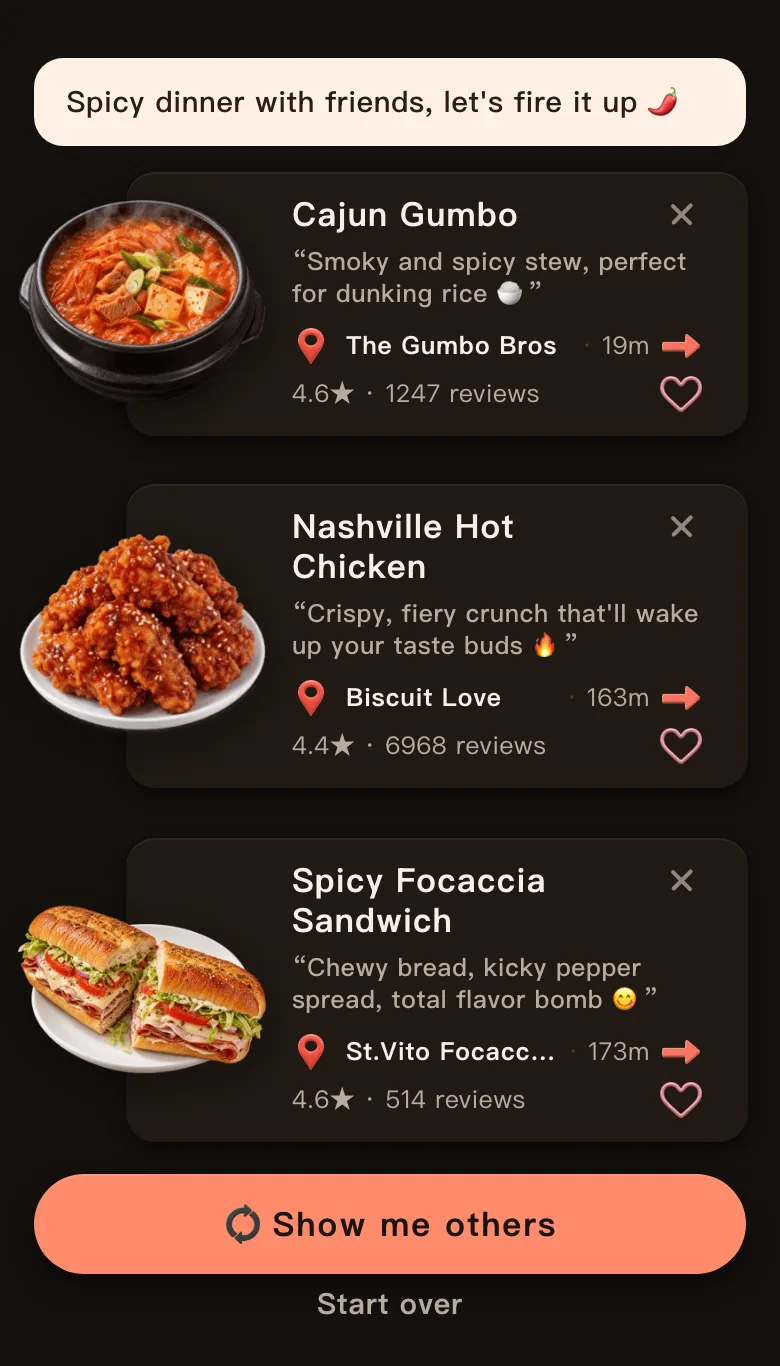
For this post I pointed Today’s Mealow, my own app, at downtown Nashville and asked for a spicy dinner for a group. Its three picks were Cajun gumbo, Nashville hot chicken and a spicy focaccia sandwich. Three good options and no clear favorite, so I added a fourth, a burrito bowl I’d been half thinking about, and ran the bracket.
| Match | Option A | Option B | Which could wait until tomorrow? | Goes through |
|---|---|---|---|---|
| 1 | Cajun gumbo | Spicy focaccia sandwich | The sandwich. It would make an easy lunch tomorrow. | Cajun gumbo |
| 2 | Nashville hot chicken | Burrito bowl | The burrito bowl. I can get one any night. | Nashville hot chicken |
| Final | Cajun gumbo | Nashville hot chicken | The gumbo. A stew keeps for another cool evening. | Nashville hot chicken |
The hot chicken won because it’s the dinner I’d regret pushing back. It’s also the one that’s best eaten straight away, at a table with friends. The other three didn’t disappear. They became the next few dinners, in the order they lost.
How do I fill the bracket when I can’t think of anything?
When you can’t think of any dinner options, borrow them. Spin a dinner wheel four times, or take the three dishes from a food picker and add one of your own. You can also write down the last dinner you enjoyed and three others like it. The tomorrow test only needs options, not good ideas.
The dinner wheel is the quickest way to fill a bracket. Spin it four times and write each result down, or press Shuffle to get a fresh set of eight. If a spin lands on something you’d never eat tonight, spin again before the bracket starts. The test works best when every option is something you’d actually eat.
What if both dinners could wait until tomorrow?
If both dinners could wait until tomorrow, ask which one will be harder to get tomorrow. A place that’s closed tomorrow, an ingredient that won’t keep, or a friend who’s only free tonight all break the tie. If nothing breaks it, take the one closer to you right now.
A tie in the final usually means you’d be happy either way, which is good news. Pick one, and the other is already set for tomorrow.
How do I decide what I want for dinner with someone else?
To decide what you want for dinner with someone else, each person brings two options and you run one bracket together. In each match, the dish that either of you would happily postpone loses. The winner is the dinner neither of you wants to push back.
Nobody has to name a favorite out loud, which keeps the two of you from passing the choice back and forth. Each person only answers one question per match. When you’re cooking rather than ordering, run the bracket the same way, and then check the winner against your fridge with the kitchen test.

Need options for your bracket? Today’s Mealow asks six questions, from the cuisine you want to who you’re eating with, and picks 3 dishes from real places near you.
Get three dinner optionsIs a what do I want for dinner quiz worth taking?
A what do I want for dinner quiz is worth taking as a source of options. A quiz gives you one answer from a few clicks, and that answer is a fair bracket entry. Put it in against your own ideas and run the tomorrow test. If it wins, it wins on your terms.
The same goes for a wheel or a friend’s suggestion. Any source of ideas works, as long as the final call comes from the one question that matters tonight: which of these can’t wait?
What else do people ask about running a dinner bracket?
How many options should a dinner bracket have?
A dinner bracket works well with four options, which makes three matches. Two options is a single match. Eight options takes seven matches, which is more deciding than a hungry person wants.
What is a good lazy dinner?
A good lazy dinner asks for one warm thing from the stove and lets people assemble the rest themselves. The build-your-own guide has a table of them.
What if I want something that isn’t on my list?
If a dish you didn’t list keeps coming to mind during the bracket, add it as a challenger to the current winner. If it keeps showing up, give it a fair match.
Should I eat the losing dishes later in the week?
The losing dishes make a good list for the rest of the week. Eat them in the order they lost, so the one that lost the final comes first.