What Should I Eat Today? A 3-Question Way to Decide
In short
- More ideas rarely help. Cut the list down before you start browsing.
- Ask three things, in this order: how hungry am I, what does my body want, and how much time and effort do I have.
- Pick a type of food first, then a dish, then a place. Deciding all three at once is what stalls you.
- If you still can't choose, let something else pick and see how you feel about it.
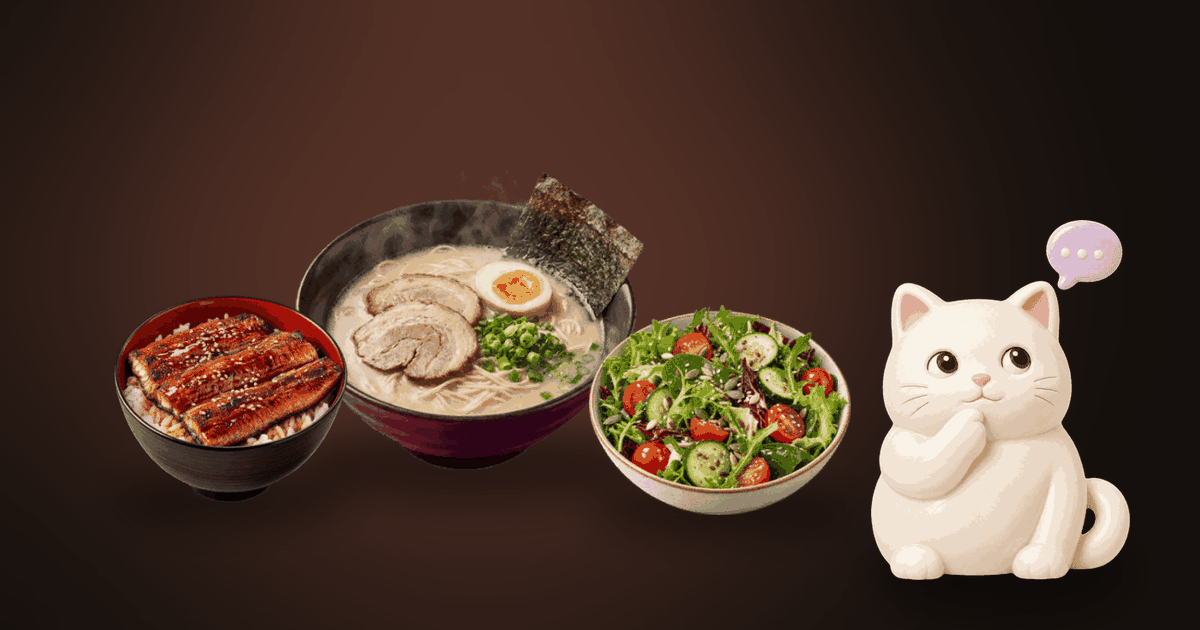
It's 12:40, you're hungry, and you've had the delivery app open for ten minutes. Nothing is wrong with any of the options. There are just too many of them, and each one is fine, which makes none of them feel right.
You already know dozens of foods you like, so "what should I eat today" is about narrowing, and the quickest way through is to throw most of the options away on purpose before you start comparing.
Why is deciding what to eat so hard?
Because every option is acceptable. When nothing is clearly bad, your brain keeps comparing small differences, and the list never gets shorter. Hunger makes it worse: the longer you wait, the less patient you are with any single choice.
Most advice answers this with another list: 50 dinner ideas, 30 lunches, 20 snacks. That helps when you've run out of ideas. It makes things worse when you have too many, which is most days. A longer list is more to compare.
What works better is a filter. A few questions that each remove a big chunk of the options, so by the end you're choosing between two or three things, not twenty.
What are the three questions that narrow it down?
Ask them in this order: how hungry am I, what does my body want right now, and how much time and effort do I have. Each answer cuts the list roughly in half, and together they usually leave you with one obvious type of food.
1. How hungry am I, really? Starving and "could eat" are different meals. If you're starving, skip anything that needs a wait or a long menu. If you could eat, you have room for something you'd actually enjoy, or something lighter.
2. What does my body want? "What sounds good" is too open a question. Try one of these instead: something warm or something cold? Something with a kick, or something plain? Heavy or light? If you're tired, run-down, or just not very hungry, that alone rules out a lot. A big greasy meal on a day you have no appetite is how you end up eating three bites and feeling worse.
3. How much time and effort do I have? Eating out, getting delivery, or making something at home are three different decisions. Pick the mode first. Once you know you're ordering in, you can stop thinking about the restaurant you'd need to drive to.

This is exactly what the app asks you, in about six taps, and then it picks 3 dishes from real places near you.
Try the 3 questionsShould I pick the food or the restaurant first?
Pick the type of food first, then the dish, then the place. Starting with restaurants pulls you straight into comparing menus, ratings and prices all at once, which is the exact comparing you were trying to avoid.
A good order looks like this:
- Type of food. Noodles, a rice bowl, something grilled, a salad, a sandwich.
- The dish. Beef noodle soup, not "Asian food". Specific dishes are easier to want.
- The place. Now look for somewhere nearby that does that dish well.
This works because each step has fewer choices than the last. By the time you're looking at restaurants, you're only looking at the few that serve the thing you already want. You'll also order faster once you're there, because you walked in knowing.
What should I eat today if I'm tired or not very hungry?
Go for something warm and simple: a bowl of soup, congee, noodles in broth, rice with something on top, or eggs. You can eat these slowly and stop halfway without feeling you wasted a meal. Save the big, rich order for a day you're properly hungry.
On low-energy days the mistake is ordering what you'd want on a good day. The picture looks great, and then it arrives and it's too much. Pick something you could eat half of and still feel fine. If you'd like more to eat later, a small snack is easier than a second full meal.
If you're actually unwell, ask a doctor or pharmacist what to eat. This post is about the everyday version, when you're tired, busy, or just not feeling it.
What if I'm eating with someone else?
Decide who has a hard no first, then let one person pick. Ask everyone for one thing they can't or won't eat, set those aside, and hand the choice to a single person. Two people negotiating every option is how a five-minute decision becomes thirty.
On a date or with friends, the setting matters as much as the food. Shared plates, hot pot, tapas or a big pizza work well for groups because nobody has to commit to one dish. For a quiet dinner for two, somewhere you can hear each other beats somewhere with the best reviews.
Allergies and strong dislikes are the one thing worth asking about up front. It takes ten seconds and saves the awkward moment at the table.
What if I still can't decide?
Let something else choose, then notice your reaction. If your first feeling is relief, go with it. If it's "no, not that", you've just learned what you actually want. Either way you have an answer, and you got it faster than by thinking harder.
Flipping a coin between your last two options works for the same reason: while it's in the air, you usually find out which side you were hoping for. A food wheel does the same job when you have more than two.
This is the idea behind Today's Mealow. You tell a little cat what kind of meal it is, how you're feeling, what flavor you're after, who you're with, and what you skip. It picks three dishes from real restaurants near you, each with a one-line reason. If none of them land, you ask it to show you others. Three options is small enough to choose from, and different enough that one of them usually clicks.

Free in your browser, nothing to install. English or Chinese.
Pick my lunch nowWhat else do people ask?
What should I eat today for lunch?
Something you can finish without a food coma: a rice bowl, a noodle soup, a wrap or a salad with some protein in it. If you have a busy afternoon, pick the lighter option.
What should I eat today for dinner?
Run the three questions: how hungry, what your body wants, and how much effort you have left. Dinner is where the effort question matters most, since most people have the least energy then.
Is there an app that decides what to eat for you?
Yes. Today's Mealow asks a few quick questions and picks three dishes from real places near you. It's free and runs in the browser, and there's also a WeChat Mini Program.
How do I stop wasting time deciding what to eat?
Limit the choice before you browse. Decide the type of food first, keep a short list of go-to dishes, and give yourself two minutes. When the time's up, go with whatever you were leaning toward.
Does it matter what order I decide in?
It does. Food type, then dish, then place. Going the other way round means comparing everything at once, which is what makes the decision feel impossible.