What Should I Eat for Lunch? Let the Afternoon Pick
In short
- Ask two things: what does your afternoon look like, and where will you eat it?
- Your afternoon sets the size: smaller if a busy stretch comes right after, a proper meal if dinner will be late.
- Where you eat sets the format: a plate at home, one container at your desk, one hand on the move.
- For work lunches, decide tomorrow’s while you clear up tonight’s dinner.

Lunch rarely gets its own thinking time. It gets squeezed into the gap between one thing and the next, so it tends to end up being whatever is closest. My way around that is to let the rest of the day make most of the choice, and I recently ran that idea against a real set of lunch picks.
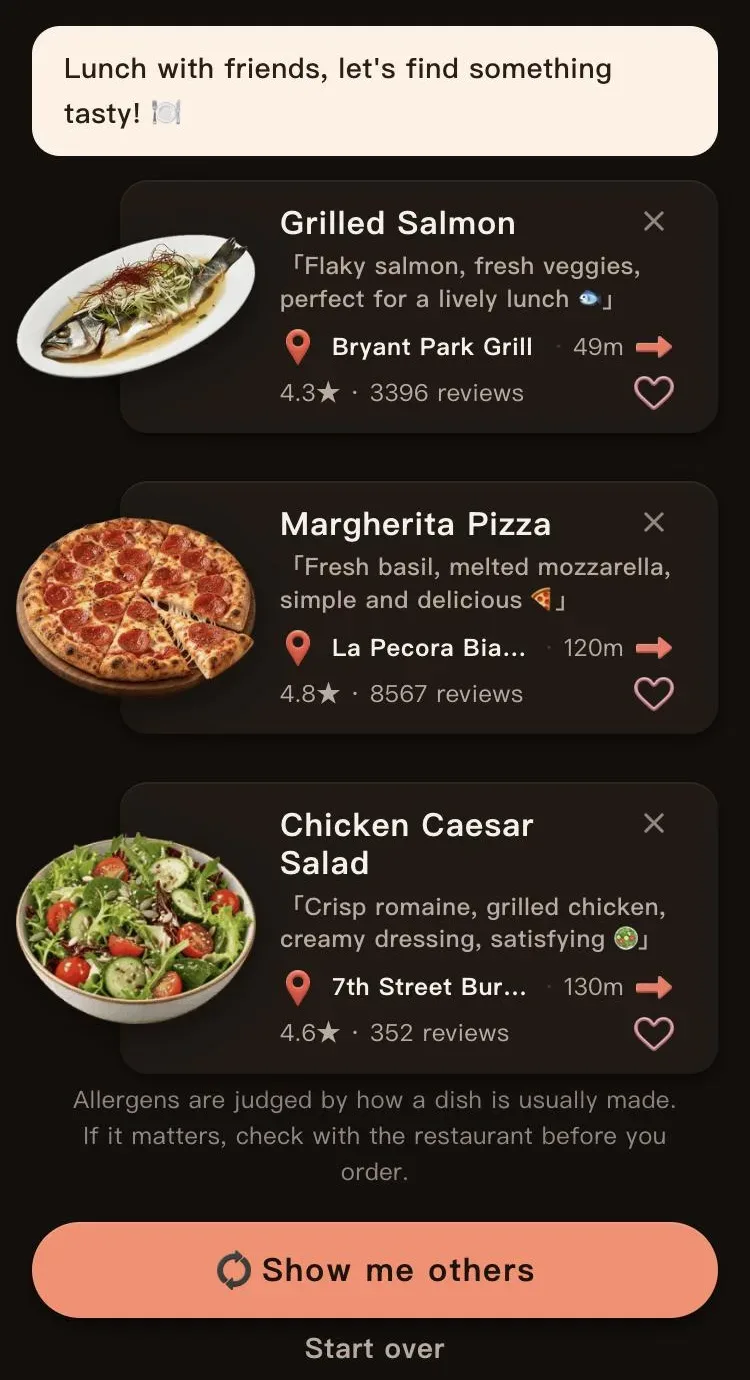
I make Today’s Mealow, so this was a deliberate test, not a hungry walk through Midtown. The cat answered with “Lunch with friends, let’s find something tasty!” and three dishes: grilled salmon, a margherita pizza and a chicken Caesar salad. The furthest was about 130 meters away. A note under the cards said allergens are judged by how a dish is usually made, so check with the restaurant if it matters. What it couldn’t know was my afternoon, and that’s the part that picks between the three.
What should I have for lunch today?
To choose lunch today, ask two questions: what does your afternoon look like, and where will you eat it? Your afternoon decides how big lunch should be. Where you eat decides the format: a plate, a box or something you hold in one hand.
- What does my afternoon look like? If a long meeting, a presentation or a drive comes straight after, keep lunch small and bring a snack. If dinner will be late, make lunch a proper meal. If the afternoon is quiet, have the lunch that takes longer to get.
- Where will I eat it? At a table, anything that needs a plate and a knife and fork is fine. At a desk, you want one container and one utensil you can use between emails. In the car or walking between places, it has to be something you can hold.
If the harder part is how hungry you are or what to spend, the three-question guide covers that.
How do the two questions sort three real lunch picks?
Three good lunch options near each other get sorted by your afternoon. In my Midtown test, sitting down with friends settled the format. The size question did the choosing: the salad before a busy afternoon, the salmon or the pizza when dinner will be late.
Start with where you’ll eat. Lunch with friends near Bryant Park means a table, so every plate on the screen qualifies and nobody has to eat one-handed. The format question had nothing left to rule out, which happens a lot when you’re eating out with company.
That leaves the afternoon. Here’s how I’d read the same three picks on three different days:
- A call or a presentation right after. The chicken Caesar salad. It’s the lightest of the three, and you can stop when you’ve had enough without leaving half a pizza behind.
- Dinner pushed late by a show or a long commute. The salmon or the pizza, eaten as a proper meal.
- Nothing booked until the evening. Whatever the table wants. A pizza is easy to share, and a free afternoon is the time to linger over it.
Your friends don’t have to follow your afternoon. If they want the pizza and you have a call at two, you can still order the salad at the same table. And if none of the three fit, I’d tap “Show me others” before I’d start browsing menus from scratch.
What should I eat for lunch at home?
An easy lunch at home is last night’s dinner with one fresh thing added, something on toast, or instant noodles turned into a real meal. You have a kitchen and a table, so use them, but you don’t have to cook a second dinner in the middle of the day.
The two questions still apply. Say you’re working from home with a long call soon after lunch and dinner at the usual time. You’ll eat at the kitchen table, so a plate is fine, but nothing heavy before the call. A grilled cheese and a cup of tomato soup fits. The big bowl of leftover curry can wait for a day when the afternoon is empty.
The easy version means no recipe and one pan at most:
- Leftovers plus one thing. Leftover curry with a fried egg on top, or last night’s roast vegetables stirred through pasta with some cheese.
- Something on toast. Beans on toast, a tuna melt, or mashed avocado with chili flakes and lime.
- Upgraded instant noodles. Crack an egg into the pot and add a handful of spinach or frozen greens before the noodles are done.
Working from home makes it tempting to graze all afternoon. Sitting down to a plate, even a small one, marks lunch as done. For a stock of no-recipe meals that work at any time of day, the lazy dinners list doubles as a lunch list.
What are simple lunch ideas for work?
Simple lunch ideas for work are ones that sit in a container all morning and still taste good at your desk, either cold or warmed in the office microwave. Cold sesame noodles, a bean and grain salad, rice balls, or soup in a thermos all fit.
- Cold sesame noodles with cucumber and spring onion, eaten straight from the box.
- A bean and grain salad: chickpeas, couscous or farro, chopped peppers and a lemony dressing packed in a small jar on the side.
- Rice balls with a filling you like, such as salmon, tuna mayo or pickled plum.
- Soup in a thermos, for days when the microwave has a queue.
- Leftover chili or stew with rice, to warm up at work.
Keep anything wet, like dressing or sauce, in its own pot until you eat, so the rest of the box stays crisp. If a call follows lunch, the noodles or the rice balls are the smaller choice; save the chili for a day when dinner will be late.

Forgot to pack a box? Today’s Mealow asks six questions, from the cuisine you want to what you don’t eat, then picks 3 dishes from real places near you. Pick lunch as the meal and answer the rest with your afternoon in mind.
Find lunch nearbyWhat can adults eat for lunch instead of a sandwich?
If you’re tired of sandwiches, try a snack plate, a bento-style box, or a slice of frittata with salad. These are simple lunch ideas for adults that aren’t sandwiches, pack just as easily, and feel more like a meal.
A snack plate is just a few small things together: hummus, crackers, cucumber, a piece of cheese, olives and a boiled egg. It needs no cooking, and you can build it from whatever’s left in the fridge at the end of the week.
A bento-style box is rice in one corner, two leftovers beside it, and something pickled or crunchy to finish. A frittata made on Sunday gives you slices to eat cold through the week, with a handful of salad leaves on the side. Can’t pick between the three? Let one of the free food pickers choose.
What should I have for lunch if I’m eating on the go?
For lunch on the go, pick something you can eat with one hand and no table. A samosa, a steamed bao, a falafel pita or a hand pie all work. If you’re driving, skip anything that needs a spoon or comes with a pot of sauce.
When you’re buying lunch between errands, choose the place on your route over the best place in town. A detour for lunch eats into the afternoon you were trying to protect. In my Midtown test every pick was a short walk away, which is the right distance for a lunch squeezed between errands.
What should I make tonight for tomorrow’s lunch?
The simplest lunch to make tonight is one more portion of whatever you’re cooking for dinner. Box it up before anyone goes back for seconds and put it in the fridge. Tomorrow morning you just take it with you.
This works best with dinners that reheat well: stews, pasta bakes, dal, casseroles. On nights when dinner won’t keep, use the clear-up time instead. Cook an extra handful of rice or pasta while the pan is still out, and it becomes the base for tomorrow’s box.
You also get to pick tomorrow’s food after you’ve eaten, with no rush. Glance at tomorrow’s calendar while you pack, and you can size the box to the afternoon before the morning gets busy.
What else do people ask about what to have for lunch?
What’s a cheap lunch I can bring to work?
Rice and beans, a big pot of lentil soup split into boxes, or pasta with whatever vegetables are cheap that week. Cooking once for several lunches costs less than buying lunch out each day.
What should I have for lunch if I skipped breakfast?
Eat lunch a little earlier if you can, and make it a full sit-down meal, not the small lunch you’d have before a busy stretch. Order or heat something you can start on right away, like soup or bread.
How do I keep packed lunches from getting boring?
Keep the base the same and change the topping or sauce. The same rice and chickpeas feel different with sesame dressing one day and lime and chili the next. Can’t choose? Put your usual sauces on a food wheel and spin when you pack.
What should I have for lunch on a weekend?
On a weekend with nothing planned, the afternoon is free. Have the lunch that takes longer: somewhere you’d walk to, or a slow cook at home like a pan of shakshuka.